
Authentic Miso Soup Recipe- Easy & Delicious
Miso soup recipe: the ultimate comfort food. There’s something incredibly soothing about a warm bowl of miso soup, isn’t there? It’s a dish that whispers of cozy evenings, thoughtful meals, and a delicious simplicity that belies its depth of flavor. For many of us, it’s an instant trip back to our favorite Japanese restaurant, or perhaps a taste of home. The magic of a good miso soup lies in its delicate balance of savory, umami-rich miso paste, the subtle sweetness of dashi broth, and the delightful textures of its traditional accompaniments like silken tofu and tender wakame seaweed. It’s surprisingly quick to prepare, making it an ideal starter or a light lunch. This miso soup recipe will guide you through creating that perfect, soul-warming bowl right in your own kitchen.
Why This Miso Soup Recipe is Special
We love this particular miso soup recipe because it’s adaptable and consistently delicious. It’s the perfect canvas for adding your favorite seasonal vegetables or protein, making it more than just a side dish – it’s a versatile part of any meal. This is your invitation to unlock the secrets behind this beloved Japanese staple.
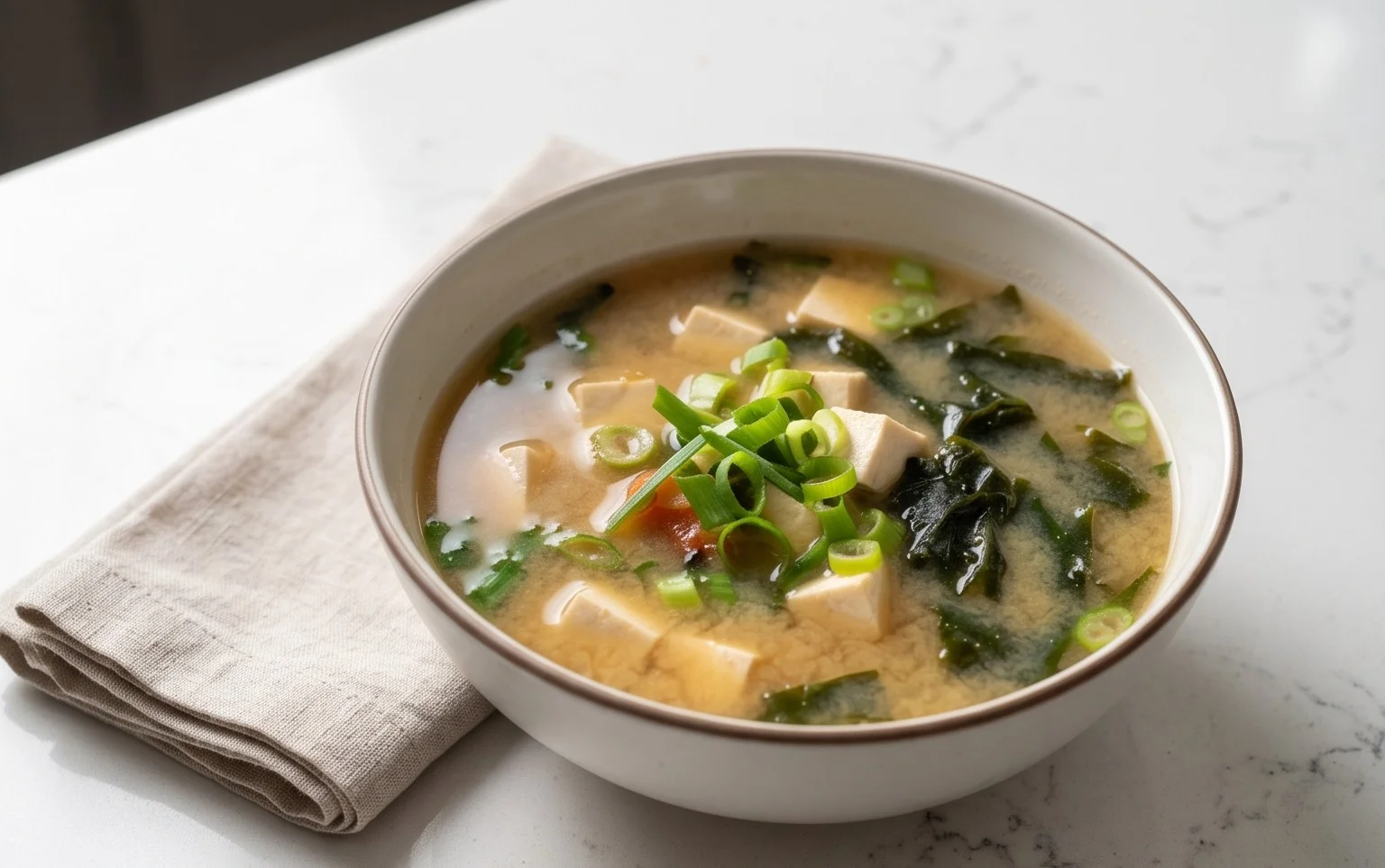
The Comforting Embrace of Homemade Miso Soup
There’s something undeniably soul-soothing about a warm bowl of miso soup. It’s a staple in Japanese cuisine, a humble yet profoundly flavorful dish that can be enjoyed any time of day. Whether you’re starting your morning, seeking a light lunch, or rounding off a delicious meal, this simple recipe for authentic miso soup is sure to become a go-to. Forget the packets and instant versions; making your own miso soup from scratch is incredibly easy and the resulting depth of flavor is incomparable. We’re going to walk through it step-by-step, so you can experience the true essence of this beloved Japanese comfort food.
Ingredients:
Crafting Your Comforting Miso Soup
The beauty of miso soup lies in its simplicity. With just a few key ingredients, you can unlock a world of savory, umami-rich goodness. Let’s get started on this delightful culinary journey.
Preparing the Foundation: Dashi and Seaweed
Our first step is to prepare the base of our soup: the dashi. Dashi is a fundamental ingredient in Japanese cooking, providing a clean, savory flavor that’s distinct from other broths. If you’re new to dashi, you can find instant dashi granules or packets at most Asian grocery stores, which are very convenient. For this recipe, we’ll use 2½ cups of prepared dashi.
In a medium saucepan, pour your 2½ cups of dashi. If you’re using dried seaweed, like wakame, it will rehydrate and expand significantly, so don’t be tempted to add too much initially. Add the 1 heaping tablespoon of dried seaweed directly to the dashi. We want the seaweed to soften and release its subtle oceanic notes into the broth.
Gentle Heating and Infusion
Now, place the saucepan over medium heat. We want to bring the dashi to a gentle simmer. It’s important not to boil the dashi vigorously, as this can diminish its delicate flavor. As the dashi heats up, you’ll notice the dried seaweed starting to unfurl and soften. This process usually takes about 5-7 minutes. Keep an eye on it and stir occasionally. While the dashi is heating, you can prepare your other ingredients.
Preparing the Silken Tofu
The silken tofu adds a wonderfully delicate texture to the miso soup. It’s incredibly soft and almost melts in your mouth. Take your 4 oz of silken tofu and carefully cut it into small, bite-sized pieces. Aim for cubes or small squares, about ½ inch in size. Be gentle with silken tofu as it can break apart easily. Set these aside while you continue with the soup.
Dissolving the Miso Paste: The Key to Flavor
This is arguably the most crucial step in making delicious miso soup. Miso paste is a fermented soybean paste that forms the heart of the soup’s flavor. It’s important to dissolve the miso paste properly to ensure a smooth, evenly flavored soup, and to preserve its beneficial probiotics.
Once your dashi with seaweed has reached a gentle simmer and the seaweed is tender, reduce the heat to low. This is vital: you should never boil miso paste, as high heat can destroy its delicate flavor and nutrients. Ladle a small amount of the warm dashi into a separate bowl. Add your 2 to 2½ tablespoons of miso paste to this bowl. Start with 2 tablespoons if you’re unsure of your preference, and you can always add more later. Using a whisk or a fork, stir the miso paste vigorously into the warm dashi until it is completely smooth and no lumps remain. This step ensures the miso is evenly distributed throughout the soup, preventing pockets of strong miso flavor.
Combining and Finishing the Soup
With your miso paste fully dissolved into a smooth liquid, it’s time to combine it with the rest of the soup. Gently pour the dissolved miso mixture back into the saucepan with the dashi and seaweed. Stir everything together well. Now, add your prepared silken tofu pieces to the saucepan.
Allow the soup to heat through gently on low heat for another 2-3 minutes. The goal here is to warm the tofu and the dissolved miso without letting the soup come to a boil. You’ll notice the soup will become slightly opaque as the miso is incorporated. Taste the soup and adjust the seasoning if needed. If you prefer a stronger miso flavor, you can dissolve a little more miso paste in a small amount of warm dashi and add it to the pot.
Serving Your Masterpiece
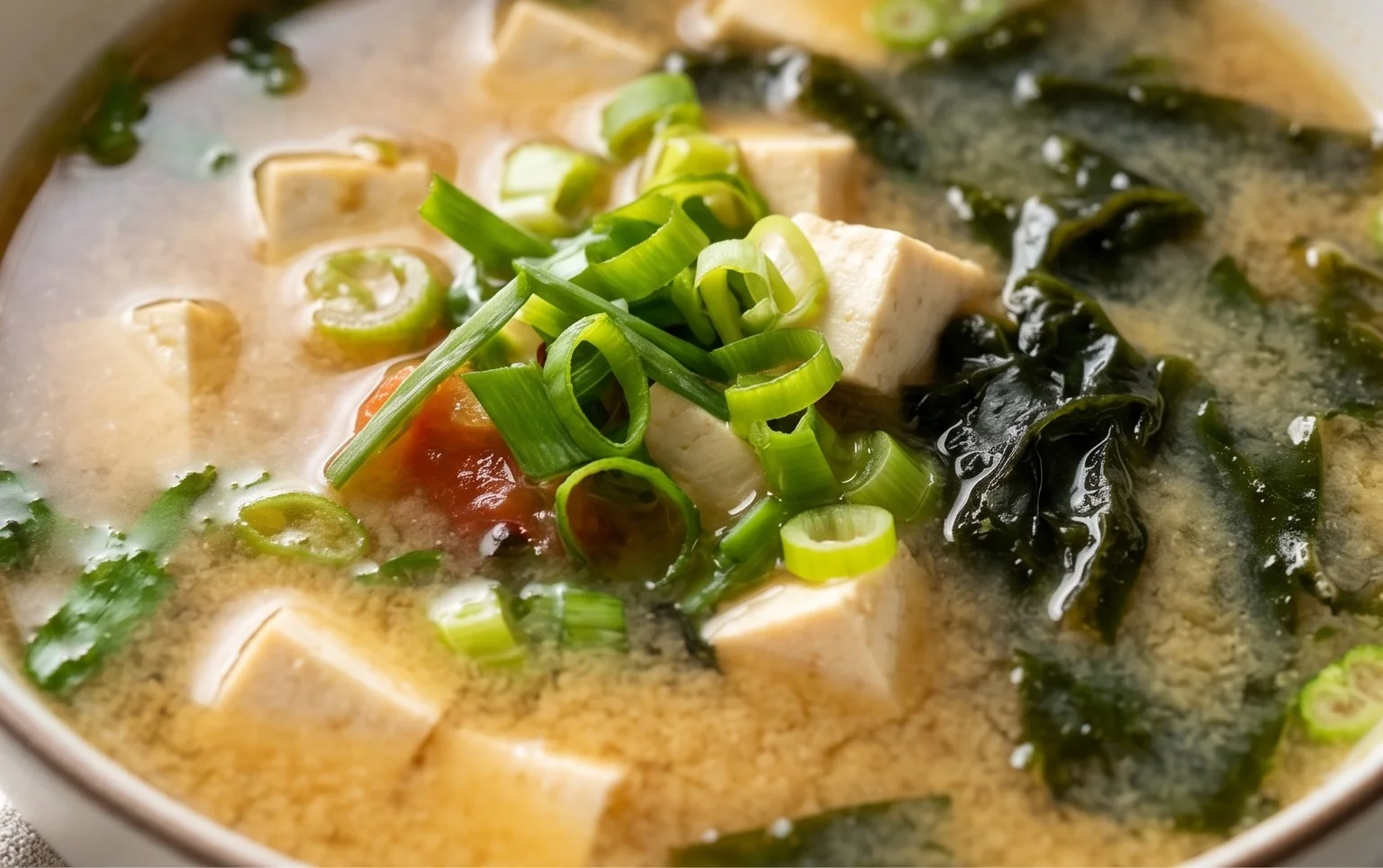
Once the soup is heated through and the flavors have melded, it’s time to serve. Ladle the hot miso soup into individual bowls, making sure to distribute the softened seaweed and silken tofu evenly. Finally, garnish each bowl with the freshly chopped scallions. The bright green scallions add a pop of color and a fresh, slightly sharp flavor that perfectly complements the savory depth of the miso.
Enjoy your wonderfully comforting and homemade miso soup! It’s a simple pleasure that’s incredibly rewarding to create.
Conclusion:
There you have it – a straightforward and incredibly rewarding Miso Soup Recipe that brings the comforting flavors of Japan right into your kitchen. What makes this recipe truly special is its simplicity, allowing the rich, umami-packed miso paste to shine. It’s a delightful starter, a light lunch, or a perfect accompaniment to any meal, offering warmth and nourishment with every spoonful. We’ve seen how versatile it is, and we’re confident you’ll find your favorite way to enjoy it.
Don’t hesitate to experiment! Try adding silken tofu for extra protein, shiitake mushrooms for a deeper earthy flavor, or even a sprinkle of toasted sesame seeds for added crunch. The beauty of this miso soup lies in its adaptability. So, gather your ingredients, follow these simple steps, and discover the joy of making your own delicious, authentic miso soup. We encourage you to give it a try – you won’t be disappointed!
Frequently Asked Questions about Miso Soup:
Q1: What is the best type of miso paste to use for this recipe?
A1: While you can use white, red, or mixed miso, white miso (shiro miso) is generally mild and slightly sweet, making it a fantastic starting point for begin extractners. Red miso (aka miso) offers a bolder, saltier, and more intense flavor, while mixed miso (awase miso) provides a balance of both. Feel free to explore and find your personal favorite!
Q2: Can I add other vegetables to my miso soup?
A2: Absolutely! This recipe is incredibly forgiving. Popular additions include thinly sliced carrots, bok choy, spinach, bean sprouts, or even corn. Just be sure to add heartier vegetables earlier in the simmering process so they cook through properly.
Q3: How do I store leftover miso soup?
A3: It’s best to store leftover miso soup in an airtight container in the refrigerator for up to 2-3 days. However, it’s important to note that the dashi and miso will lose some of their delicate flavor over time. For the freshest taste, we recommend preparing only what you plan to eat.
Miso Soup Recipe
A simple and authentic miso soup recipe that is quick to prepare and full of traditional Japanese flavors. Perfect as a starter or a light meal.
Ingredients
-
2½ cups Dashi
-
1 heaping tablespoon dried seaweed
-
4 oz silken tofu (cut into small pieces)
-
2-2½ tablespoons miso paste (or to taste)
-
1 tablespoon scallion (chopped)
-
1 teaspoon soy sauce
-
½ teaspoon mirin
Instructions
-
Step 1
In a medium pot, combine the Dashi and dried seaweed. Bring to a gentle simmer over medium heat. -
Step 2
Once simmering, reduce heat to low and let the seaweed rehydrate for about 5 minutes. -
Step 3
In a small bowl, whisk the miso paste with a ladleful of the hot Dashi until smooth. This prevents lumps. -
Step 4
Gently add the silken tofu pieces to the pot. Do not boil after adding tofu. -
Step 5
Stir the dissolved miso mixture into the pot. Add soy sauce and mirin for extra depth of flavor. -
Step 6
Warm through for 1-2 minutes, ensuring the soup does not boil, as this can diminish the miso’s flavor and aroma. -
Step 7
Ladle the miso soup into bowls and garnish with chopped scallions before serving hot.
Important Information
Nutrition Facts (Per Serving)
It is important to consider this information as approximate and not to use it as definitive health advice.
Allergy Information
Please check ingredients for potential allergens and consult a health professional if in doubt.